If I Had a Hammer reached No. 10 for Peter, Paul and Mary in 1962, but the song was already 13 years old.
Pete Seeger and Lee Hays wrote it in 1949, and the trio turned it into a double Grammy winner.
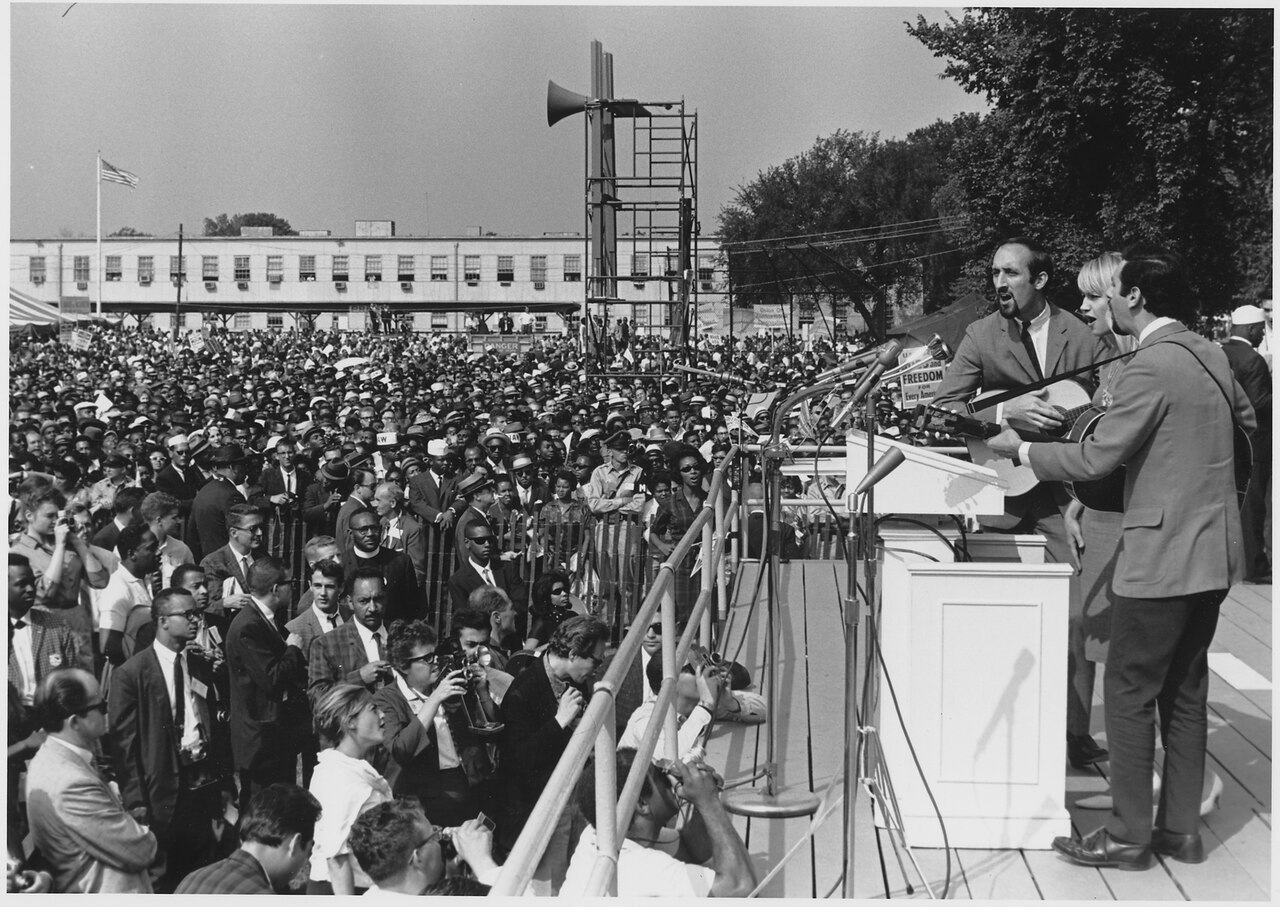
Table of Contents
- Where Did the Song Come From?
- How Did the Trio Make It a Hit?
- How High Did It Chart?
- Covers and Legacy
- FAQ
Where Did If I Had a Hammer Come From?
Written for a Cause
Seeger and Hays wrote the song in 1949 in support of the Progressive movement, according to Wikipedia.
The two men first performed it on June 3, 1949, at St. Nicholas Arena in New York City.
The event was a dinner for Communist Party leaders then on trial in federal court.
Four months later, Seeger played it as one of three warm-up songs before Paul Robeson's September 4 concert near Peekskill, New York.
That concert ended in the Peekskill Riot.
The Weavers and the Blacklist
The Weavers, the folk quartet of Seeger, Hays, Ronnie Gilbert and Fred Hellerman, recorded it first.
They issued it as "The Hammer Song" on a 78 rpm single in March 1950.
The Red Scare and the blacklists kept it away from a wide audience.
Seeger and Irwin Silber even named their new magazine, Sing Out!, after the song's chorus.
Seeger Before Congress
The song followed Seeger to Washington.
Songfacts notes that when the House Un-American Activities Committee questioned him on August 18, 1955, its lawyer read out a 1949 notice of the song's first performance.
Seeger refused to discuss where he had sung.
He said he was proud that he had sung for Americans of every political view.
How Did Peter, Paul and Mary Make It a Hit?
A Debut Album Single
Warner Bros. released the trio's version in July 1962, from their self-titled debut album.
Albert Grossman produced the album, and Milt Okun served as musical director, according to the album's Wikipedia credits.
The B-side was "Gone the Rainbow."
The Melody Changed
The trio did more than sing the song again.
Songfacts says they rewrote its melody.
Seeger himself admitted that most people now sing it the way they heard it on the Peter, Paul and Mary record.
Our Peter, Paul and Mary biography tells how the trio came together in Greenwich Village.
How High Did It Chart?
The single peaked at No. 10 on the Billboard Hot 100 in 1962.
It reached No. 13 on Cash Box and No. 17 on Canada's CHUM chart.
| Chart | Peak |
|---|---|
| Billboard Hot 100 (US) | No. 10 |
| Cash Box Top 100 (US) | No. 13 |
| CHUM Chart (Canada) | No. 17 |
Two Grammys
The recording won Best Folk Recording and Best Performance by a Vocal Group at the 1963 Grammy Awards.
See what else was happening that year in our 1962 year guide.
Covers and Legacy
A Bigger Hit for Trini Lopez
Trini Lopez recorded a live, Latin-tinged version at P.J.'s nightclub in Hollywood.
His Reprise single came out in July 1963 and reached No. 3 on the Hot 100.
It also reached No. 4 in the UK and No. 1 in several other countries.
The 1963 chart year looks very different in our 1963 year guide.
An Anthem for Movements
In a May 1963 interview, Paul Stookey called it "a young national anthem for the United States."
Three months later the trio sang it at the March on Washington for Jobs and Freedom.
Peter Yarrow later said the civil rights, peace and environmental movements all embraced it.
Other Famous Versions
Many artists have recorded the song since, including these:
- Martha and the Vandellas, on the 1963 album Heat Wave
- Sam Cooke, live on Sam Cooke at the Copa in 1964
- Victor Jara, in Spanish as "El martillo," in 1969
- Johnny Cash and June Carter Cash, a No. 29 country hit in 1972
The song also lives on our best 60s songs list.
Its home genre is covered in our folk rock guide.
FAQ
Who wrote the song?
Pete Seeger and Lee Hays wrote it in 1949.
Peter, Paul and Mary did not write it, but they changed the melody people now sing.
What is the song about?
The hammer is a metaphor for power, according to Songfacts.
The song calls for using that power to fight injustice and promote love.
How high did it chart for Peter, Paul and Mary?
It reached No. 10 on the Billboard Hot 100 in 1962.
It also reached No. 13 on Cash Box.
Did Peter, Paul and Mary win a Grammy for it?
Yes.
At the Grammy Awards of 1963 it won Best Folk Recording and Best Performance by a Vocal Group.
Who had a bigger hit with it than Peter, Paul and Mary?
Trini Lopez.
His live 1963 version reached No. 3 on the Billboard Hot 100.
A protest song from the blacklist years became a pop hit and then a civil rights anthem, as Wikipedia's entry on the song details.
Back to the 1960smusic.net homepage to explore every genre of the decade after hearing If I Had a Hammer.