British Invasion music was a sudden, two-year wave of UK rock and pop acts, led by The Beatles.
It took over American radio, television, and record charts starting in early 1964.
It wasn't a slow build.
It was closer to a detonation.
The fuse had already been lit before anyone in America had watched a single British band perform.
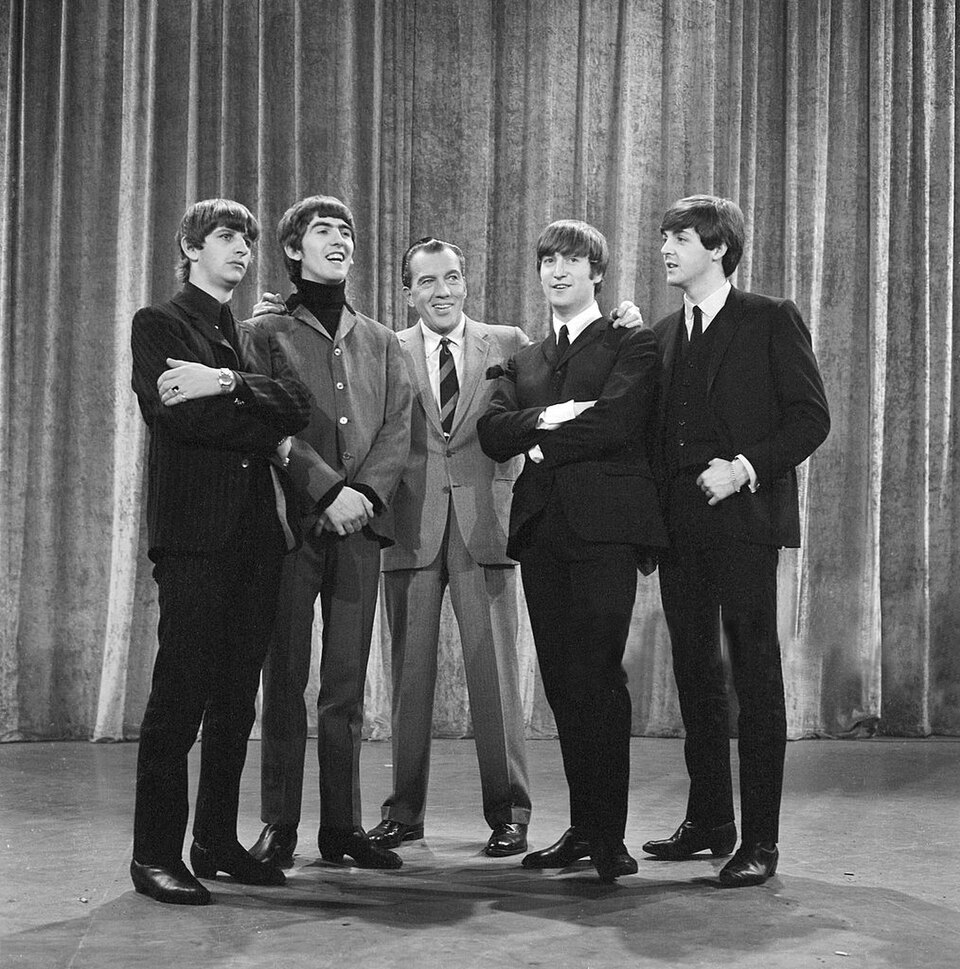
Table of Contents
- The Chart-Topper Nobody Saw Coming
- Why 1964 Hit So Hard
- The Sound: Merseybeat Meets American R&B
- More Than The Beatles: Who Made Up the Movement
- The Long Reach: What It Left Behind
- FAQ
The Chart-Topper Nobody Saw Coming
Here is the detail most retellings of the British Invasion get backwards.
73 million Americans tuned in to watch The Beatles on The Ed Sullivan Show on February 9, 1964.
By then, "I Want to Hold Your Hand" had already reached number one on the Billboard Hot 100, on January 25.
That was two full weeks before anyone in the US had seen the band perform live.
Ed Sullivan Answered a Demand That Already Existed
Ed Sullivan didn't manufacture Beatlemania out of nothing.
He put a television camera in front of a demand that already existed.
That demand had built itself through radio play and import records.
The result was the single largest US television audience recorded up to that point.
An estimated 45% of all American households with a TV set were tuned to the same channel at once.
That distinction matters, because it explains why British Invasion music moved as fast as it did.
This wasn't a single band getting lucky with one broadcast.
American teenagers discovered, ahead of the gatekeepers, that something genuinely new was happening three thousand miles away.
The industry scrambled to catch up once it saw the numbers.
Why 1964 British Invasion Music Hit So Hard
American pop music had a hole in it by late 1963.
Elvis Presley was making movies in Hollywood instead of records that mattered.
Buddy Holly, Eddie Cochran, and Ritchie Valens were gone.
The industry's answer to rock and roll had largely calcified into a run of interchangeable teen idols.
Then, within weeks of President Kennedy's assassination in November 1963, a wounded country got a jolt of unfiltered joy.
It came from four young men in matching suits who didn't sound like anything on American radio.
American Roots, Sent Back With a British Accent
What those four young men had been listening to was the real key.
The Beatles, The Rolling Stones, The Animals, and dozens of bands like them had all grown up on the same thing.
That thing was American blues, R&B, and early rock and roll.
Chuck Berry, Muddy Waters, and Little Richard were the touchstones.
That sound filtered through Liverpool's Merseybeat scene and London's blues clubs.
It came back across the Atlantic sounding both familiar and completely new.
American listeners weren't hearing something foreign.
They were hearing their own music's DNA, rearranged by people who'd fallen in love with it from a distance.
The Sound: Merseybeat Meets American R&B
The British Invasion was never one sound: that's part of why it lasted past its first single.
How Each Band Reshaped the Sound
The Beatles built tight, chiming vocal harmonies over jangling guitars.
They drew as much from the Everly Brothers as from Motown.
The Rolling Stones went the other direction, leaning hard into raw Chicago blues and R&B grit.
The Kinks took a distorted two-chord riff on "You Really Got Me" in 1964.
That riff effectively sketched out the blueprint for hard rock a full four years before anyone used the term.
The Who turned amplifier feedback and mod-scene fury into an anthem with "My Generation."
The Animals, out of Newcastle, brought a blues-club roar to "House of the Rising Sun."
That sound had nothing to do with Merseybeat at all.
That range is why so many different bands landed under the same British Invasion banner.
Beat groups, blues bands, mod acts, and pop vocal groups all reached American shores within the same eighteen-month window.
Each one interpreted the same American source material differently.
More Than The Beatles: Who Made Up the British Invasion
The Beatles opened the door in February 1964.
Dozens of acts walked through it before American audiences moved on to the next thing.
The Acts Who Walked Through the Door
The Rolling Stones brought danger and grit where The Beatles brought polish.
The Kinks and The Who pushed the guitar sound harder and louder with each single.
The Dave Clark Five had a driving beat on "Glad All Over."
That single briefly rivaled The Beatles for chart dominance in early 1964.
Herman's Hermits leaned fully into charm and novelty with hits like "I'm Henry the VIII, I Am."
They pulled in an audience The Rolling Stones never touched.
The Yardbirds and a Guitar Lineage of Their Own
The Yardbirds carried something rarer.
Across their run they employed, in succession, three guitarists: Eric Clapton, Jeff Beck, and Jimmy Page.
Between them, those three would define the sound of blues-rock and hard rock for the next decade.
The Searchers, out of Liverpool alongside The Beatles, brought jangling twelve-string melody to "Needles and Pins."
That sound would echo forward into American folk rock within a year.
None of these acts sounded interchangeable up close.
What united them was timing, geography, and a shared debt to American music sent back with a British accent.
The Long Reach: What British Invasion Music Left Behind
The British Invasion's influence didn't stop when the charts moved on.
The Sound That Echoed Forward
The Kinks' distorted riff on "You Really Got Me" is a direct ancestor of hard rock, and a decade later, punk.
The Yardbirds' guitarist lineage runs straight through Cream and Led Zeppelin.
It runs through the entire blues-rock movement of the late 1960s and 1970s.
How American Bands Answered Back
American bands responded almost immediately.
Garage rock groups across the US formed specifically in imitation of what they'd heard from Liverpool and London.
Cheap guitars and all, that kicked off a DIY scene that would eventually feed into American punk.
British acts had proven they could dominate American charts.
That proof reshaped the entire industry's appetite for signing and promoting UK talent for the rest of the decade.
By 1967, most of the original wave had either evolved dramatically or faded from the singles charts entirely.
But the two years in between reset what American pop music was allowed to sound like.
It never fully reset back.
Want to test your knowledge of British Invasion music?
Try the 1960s Music Trivia Tool.
FAQ: British Invasion Music
What was the British Invasion in music?
The British Invasion was the wave of British rock and pop bands, led by The Beatles, that achieved massive commercial success in the United States starting in 1964.
It brought acts like The Rolling Stones, The Kinks, and The Who to American radio and television and reshaped the sound of US pop music through the mid-1960s.
When did the British Invasion start?
Most historians mark its start as February 1964, when The Beatles' appearance on The Ed Sullivan Show drew an estimated 73 million American viewers.
"I Want to Hold Your Hand" had already hit number one on the Billboard Hot 100 two weeks earlier, on January 25, 1964.
Which bands were part of the British Invasion?
Key acts included The Beatles, The Rolling Stones, The Who, The Kinks, The Animals, The Yardbirds, The Dave Clark Five, Herman's Hermits, and The Searchers, among many others who found chart success in the US between 1964 and 1966.
Why did British Invasion bands sound so influenced by American music?
Most British Invasion musicians grew up listening to American blues, R&B, and early rock and roll through import records and radio.
They absorbed that sound through Liverpool's Merseybeat scene and London's blues clubs, then sent it back to America reshaped into something new.
What impact did British Invasion music have on later rock?
Its impact runs from hard rock and blues-rock, through The Yardbirds' guitarist lineage of Clapton, Beck, and Page, through to American garage rock and punk.
It also permanently expanded the US industry's appetite for British artists.
The bands above each have their own story worth digging into.
Start with The Beatles for where it all began.
Head back to the 1960smusic.net homepage to explore every other genre shaping the decade's sound.