The Supremes became the most successful act in Motown history.
The 1960s belonged to them more than to almost any American vocal group.
Three teenagers from a Detroit housing project scored five straight number one singles between 1964 and 1965.
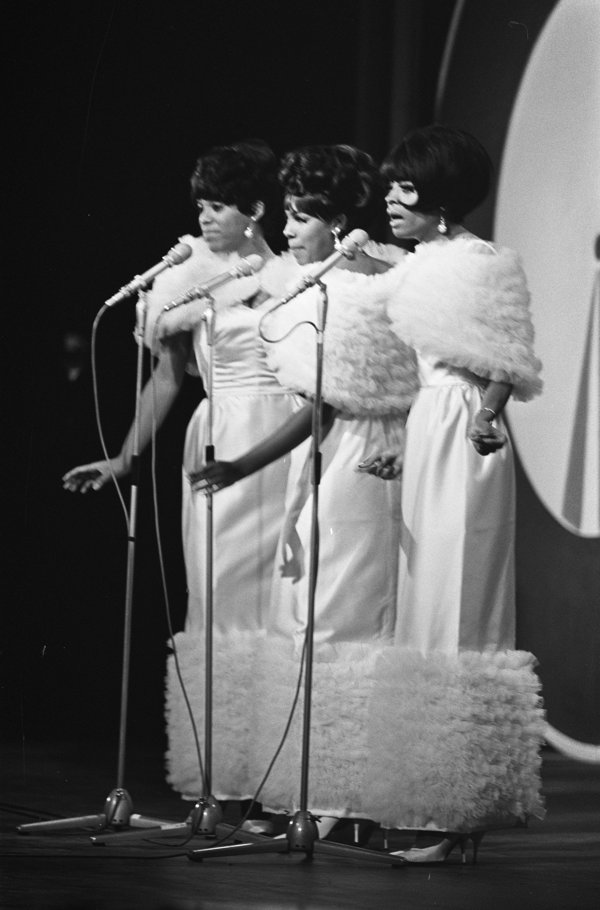
Table of Contents
- From the Primettes to Motown
- Five Straight Number Ones
- Ballard, Ross and the End of the Classic Trio
- FAQ
From the Primettes to Motown
The group formed in Detroit in 1959 as the Primettes, a sister act to the Primes.
That male group included future Temptations member Paul Williams.
Florence Ballard, Mary Wilson, Diana Ross and Betty McGlown were the original four, all from the Brewster-Douglass housing projects.
Barbara Martin replaced McGlown in 1960.
That year the Primettes cut "Tears of Sorrow" for Lu Pine Records, and it went nowhere.
Signing With Berry Gordy
With help from Smokey Robinson, the group auditioned for Motown.
Berry Gordy had them finish high school first.
He signed them in January 1961 on one condition, a new name.
Ballard picked "the Supremes" from a list Gordy supplied.
Martin left in spring 1962, and the group continued as a trio of Ross, Ballard and Wilson.
The first years were lean.
Between 1961 and 1963 they released six singles on Tamla, Motown's subsidiary label.
The first was "I Want a Guy," and none reached the Hot 100 top 40.
"When the Lovelight Starts Shining Through His Eyes" finally peaked at number 23 in December 1963.
Gordy named Ross lead singer in late 1963.
The songwriting team of Holland-Dozier-Holland took over the group's material.
Five Straight Number Ones
The breakthrough arrived in 1964.
"Where Did Our Love Go" reached number one on the Hot 100 in August.
"Baby Love" held the top spot for four weeks that fall, and "Come See About Me" followed in December.
"Stop! In the Name of Love" hit number one in March 1965.
"Back in My Arms Again" made it five in a row that June.
Few acts of the decade, in any genre, matched that streak.
The Run Through 1966 and Beyond
The hits kept coming through the rest of 1965 and 1966.
"I Hear a Symphony" topped the chart in November 1965.
"You Can't Hurry Love" followed in September 1966, and "You Keep Me Hangin' On" that November.
Holland-Dozier-Holland wrote or produced much of this run, and choreographer Cholly Atkins shaped the stage moves.
They were also regular guests on The Ed Sullivan Show.
At the mid-1960s peak, their worldwide popularity came close to matching The Beatles.
| Play | ||
|---|---|---|
| Where Did Our Love Go | August 1964 | |
| Baby Love | October 1964 | |
| Come See About Me | December 1964 | |
| Stop! In the Name of Love | March 1965 | |
| Back in My Arms Again | June 1965 | |
| I Hear a Symphony | November 1965 | |
| You Can't Hurry Love | September 1966 | |
| You Keep Me Hangin' On | November 1966 |
The 1964 run is covered in the 1964 year guide, with the follow-ups in 1965 and 1966.
"The Happening" in 1967 was their tenth number one.
"Someday We'll Be Together" in 1969 was the twelfth and last.
Ballard, Ross and the End of the Classic Trio
In 1967 Gordy renamed the act Diana Ross & the Supremes.
Cindy Birdsong first stood in for Ballard at a Hollywood Bowl benefit on April 29, 1967.
Ballard was dismissed on July 1, 1967, in Las Vegas.
Birdsong took her place in that night's second show.
Her release from Motown was finalized on February 22, 1968, with a payment of $139,804.94.
Ballard died on February 22, 1976, at age 32.
Ross Leaves, the Group Carries On
Holland-Dozier-Holland left Motown in early 1968 after a royalty dispute.
Ross gave her final show with the group on January 14, 1970, at the Frontier Hotel in Las Vegas.
Jean Terrell was introduced there as her replacement.
Scherrie Payne took over from Terrell in 1973, and Susaye Greene joined in 1976.
The farewell concert came on June 12, 1977, at the Drury Lane Theatre in London.
Motown then retired the name.
Honors and Legacy
The group entered the Rock and Roll Hall of Fame in 1988.
The Vocal Group Hall of Fame followed in 1998.
They earned a star on the Hollywood Walk of Fame in 1994.
A Grammy Lifetime Achievement Award came in 2023.
Billboard ranks them 16th on its list of the greatest Hot 100 artists.
The original trio reunited for one song on the 1983 TV special Motown 25.
Mary Wilson died on February 8, 2021.
- Diana Ross, lead vocals from late 1963 to 1970
- Mary Wilson, 1959 to 1977
- Florence Ballard, 1959 to 1967
- Cindy Birdsong, 1967 onward
FAQ
Who were the original members of The Supremes?
Florence Ballard, Mary Wilson, Diana Ross and Betty McGlown formed the group in Detroit in 1959 as the Primettes.
Barbara Martin replaced McGlown in 1960 and left in spring 1962.
That left the trio of Ross, Ballard and Wilson.
How many number one hits did The Supremes have?
The group had 12 number one singles on the Billboard Hot 100.
The first was "Where Did Our Love Go" in August 1964.
The last was "Someday We'll Be Together" in 1969.
Why did Florence Ballard leave The Supremes?
Motown dismissed Ballard on July 1, 1967, in Las Vegas, and Cindy Birdsong took her place that night.
Her release from Motown was finalized on February 22, 1968.
She died on February 22, 1976, at age 32.
When did Diana Ross leave The Supremes?
Ross left for a solo career in 1970.
Her last show with the group was January 14, 1970, at the Frontier Hotel in Las Vegas.
Jean Terrell was introduced there as her replacement.
Are The Supremes in the Rock and Roll Hall of Fame?
Yes, they were inducted in 1988 as the Ross, Wilson and Ballard lineup.
They also received a Grammy Lifetime Achievement Award in 2023.
No act showed the polish and pop reach of Detroit's hit factory better than this trio.
Their sound sits at the center of the Motown, soul and R&B story of the decade, and the full group history is on Wikipedia.
Back to the 1960smusic.net homepage to explore every genre of the decade.