Frank Sinatra entered the 1960s as a star and left it as a record executive, film actor and chart-topper again.
He started his own label, Reprise Records, in 1960 and filled it with his best-selling work.
By 1969 he had recorded "My Way", the song that became his farewell to the decade.
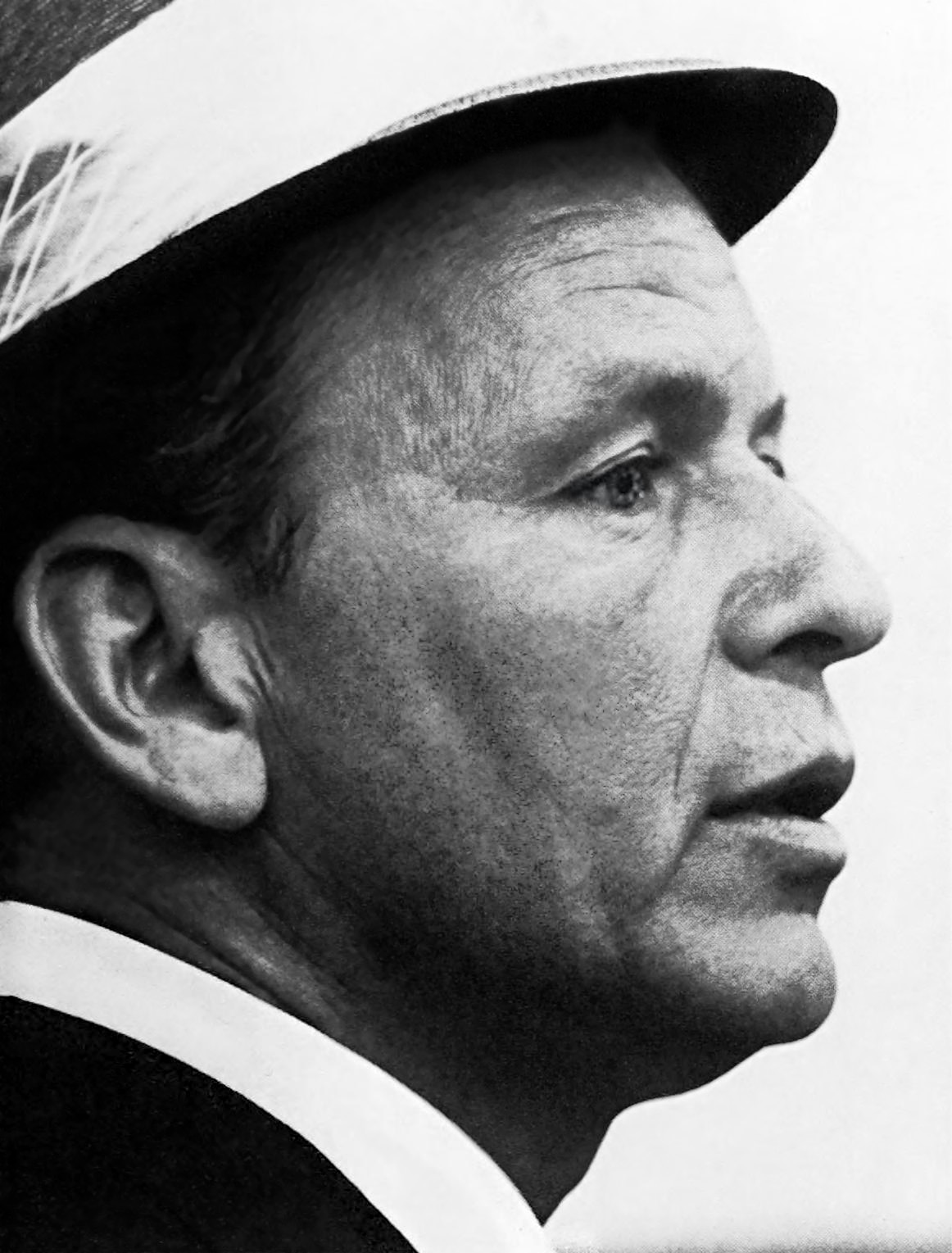
Table of Contents
- From Hoboken to Capitol
- Frank Sinatra and Reprise Records
- The Rat Pack, Film and Kennedy
- The Hits, 1964 to 1969
- Family, Awards and Retirement
- FAQ
From Hoboken to Capitol
Frank Sinatra was born on December 12, 1915, in Hoboken, New Jersey.
He decided to become a singer after watching Bing Crosby perform.
He first recorded with the bandleader Harry James, and Tommy Dorsey hired him in 1940.
Stardom and a Comeback
He went solo in the early 1940s and became the idol of the bobby-soxers.
His career stalled in the early 1950s, and he won the Best Supporting Actor Oscar for From Here to Eternity.
The role revived him, and he signed with Capitol Records.
His Capitol albums include Nice 'n' Easy, which topped Billboard in October 1960 and stayed on the chart for 86 weeks.
Frank Sinatra and Reprise Records
The 1960s began with a break from Capitol.
Frank Sinatra left the label and formed Reprise, a company built on artistic freedom for its performers.
Ring-a-Ding-Ding!
His own album Ring-a-Ding-Ding! was the first Reprise release.
It came out in February 1961 and peaked at number four on Billboard.
The Sale to Warner Bros.
Warner Bros. bought Reprise in August 1963 as part of a film deal.
Sinatra kept a one-third interest through the end of that year.
The Rat Pack, Film and Kennedy
Sinatra was a founding member of the Rat Pack, alongside Dean Martin, Sammy Davis Jr., Peter Lawford and Joey Bishop.
The group made Ocean's Eleven in 1960, shot in Las Vegas.
Robin and the Seven Hoods followed in 1964.
The Manchurian Candidate
His strongest film of the decade was The Manchurian Candidate in 1962.
Critics praised the thriller.
The Kennedy Connection
He worked hard for Kennedy's 1960 campaign and supervised the inaugural gala.
The friendship soured when the president called off a weekend visit to Sinatra's home.
The reason was Sinatra's connection to the Chicago mob boss Sam Giancana.
The Hits, 1964 to 1969
The Jazz and Easy Listening hub places him at the center of that sound.
Fly Me to the Moon
"Fly Me to the Moon" appeared on It Might as Well Be Swing in 1964, with Count Basie's orchestra.
Quincy Jones arranged it, and Bart Howard wrote the song as "In Other Words".
A copy was later played on Apollo 10 and again on Apollo 11 before the first Moon landing.
Read the full story of the recording, or see how the 1964 year guide sets the album in context.
Strangers in the Night
Frank Sinatra recorded it on April 11, 1966, and it was released the next day.
Bert Kaempfert composed the melody, and Charles Singleton and Eddie Snyder wrote the English lyrics.
The single reached number one on July 2, 1966, and also topped the UK chart for three weeks.
It won Record of the Year and Best Male Pop Vocal Performance at the 1967 Grammys.
He reportedly despised the song anyway.
Read the full Strangers in the Night story, or see how the 1966 year guide covers the rest of that summer.
Sinatra at the Sands
Earlier that year he recorded Sinatra at the Sands in Las Vegas, backed by the Count Basie Orchestra.
Quincy Jones conducted the January and February 1966 shows.
Somethin' Stupid and My Way
"Somethin' Stupid" with his daughter Nancy came out in March 1967.
Carson Parks wrote it, and it held number one for four weeks.
It remains the only father-daughter number one in American chart history.
See the 1967 year guide for the wider picture.
"My Way" was recorded in a single take on December 30, 1968, and released in March 1969.
Jacques Revaux wrote the music, and Paul Anka supplied the English lyrics.
It reached number 27 in the US and number five in the UK, where it spent 75 weeks in the Top 40.
His daughter Tina has said he came to dislike it as self-indulgent.
Read the full My Way story, or see how the 1969 year guide closes the decade.
| Play | |||
|---|---|---|---|
| Ring-a-Ding-Ding! (album) | February 1961 | Billboard No. 4 | |
| It Might as Well Be Swing (album) | 1964 | Includes "Fly Me to the Moon" | |
| "Strangers in the Night" | April 12, 1966 | Hot 100 No. 1, UK No. 1 | |
| "Somethin' Stupid" (with Nancy Sinatra) | March 1967 | Hot 100 No. 1 (4 weeks), UK No. 1 | |
| "My Way" | March 1969 | Hot 100 No. 27, UK No. 5 |
Family, Awards and Retirement
Family and Awards
His son, Frank Sinatra Jr., was kidnapped on December 8, 1963, at age 19.
He was released two days later after a $240,000 ransom was paid.
Sinatra married Mia Farrow on July 19, 1966, and they divorced in August 1968.
The CBS special A Man and His Music aired on November 16, 1965, and won an Emmy and a Peabody.
He also headlined the Newport Jazz Festival with Basie in 1965.
Retirement and Legacy
He recorded his last songs for Reprise on November 2, 1970.
He announced his retirement in June 1971, then returned with Ol' Blue Eyes Is Back in 1973.
President Reagan gave him the Presidential Medal of Freedom in 1985.
He died on May 14, 1998, at Cedars-Sinai Medical Center in Los Angeles, aged 82.
FAQ
When did Frank Sinatra start Reprise Records?
He formed the label in 1960 to gain more artistic freedom than Capitol allowed.
Its first album was his own Ring-a-Ding-Ding!, released in February 1961.
Warner Bros. bought Reprise in August 1963 as part of a film deal.
What was Frank Sinatra's biggest hit of the 1960s?
"Strangers in the Night" and "Somethin' Stupid" both reached number one on the Billboard Hot 100.
The first topped the chart on July 2, 1966, and the second held the top spot for four weeks in 1967.
Did Frank Sinatra like Strangers in the Night?
No, by most accounts.
He reportedly despised the song, even though it won the Grammy for Record of the Year.
Who wrote My Way?
Jacques Revaux composed the music for a French song.
Paul Anka wrote the English lyrics that Sinatra recorded on December 30, 1968.
Who was in the Rat Pack?
Sinatra, Dean Martin, Sammy Davis Jr., Peter Lawford and Joey Bishop made up the group.
They appeared together in films such as Ocean's Eleven in 1960.
His 1960s run turned a former teen idol into the voice of adult pop.
The best 60s songs list shows how crowded that competition was, and the full biography is on Wikipedia.
Head back to the 1960smusic.net homepage to hear more of the decade, and start with Frank Sinatra.